Skip to content
Tony Nguyen

Software Engineer

I build infrastructure for ML systems, from fraud-detection graphs to LLM serving.

At Uber I built graph, streaming and feature pipelines for fraud detection. On my own time I build side projects across AI infrastructure, developer tools and apps.

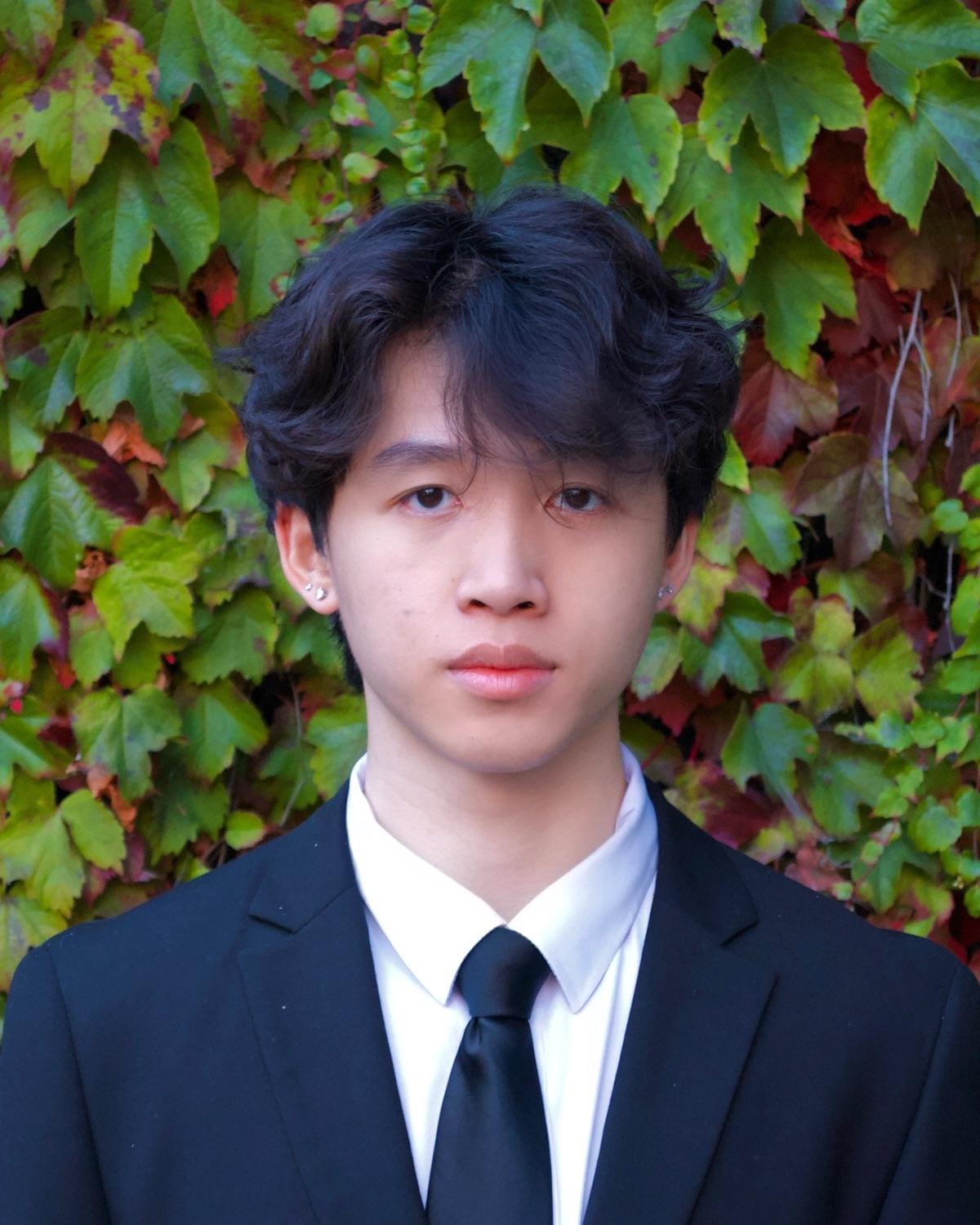
Portrait of Tony Nguyen in a dark suit and tie, standing in front of an ivy-covered wall.
Based in
San Francisco, CA
Education
UC Berkeley, B.A. Computer Science, 2025

01Selected work

Mortise

Context infrastructure for coding agents

2026 · Personal project

Mortise is a local context engine for coding agents. It ranks repository code relevant to a task and packs it into a token budget. Each span carries its file, lines and commit, and omissions are listed. Claude Code and Codex connect through their hooks and a local MCP server.

Mortise query pathA coding agent such as Claude Code or Codex sends a query by calling the mortise_context tool over a local stdio MCP server. Retrieval searches a local index built from the repository's files and Git worktree, using full-text BM25, exact-identifier and Tree-sitter symbol channels merged by weighted rank fusion. The context compiler deduplicates the ranked candidates, fits them to a token budget, keeps file, line and commit provenance on every item and names what it left out. The resulting context packet returns to the agent.coding agentClaude Code · Codex · MCP stdioretrievalBM25 · identifier · symbolover a local index of the repocontext compilerdedupe · token budgetprovenance per itemcontext packetfile · lines · commitnamed omissions, with reasonsquery
Fig. 1Mortise query path. From an agent’s query to a budgeted context packet.

Stack: Rust · SQLite FTS5 · Tree-sitter · MCP

Helix

LLM serving control plane

2026 · Personal project

Helix is a Go control plane for LLM serving. vLLM generates the tokens; Helix decides what happens to a request when capacity runs out or a worker fails. It retries only before any output reaches the client. A workbench tests those decisions in repeatable experiments.

Helix request pathA client sends a request to helixd, the Go control plane, over HTTP and receives tokens over SSE. helixd admits it into a bounded FIFO queue or refuses it with HTTP 429 when the queue is full, then places it on a worker. Leases, fencing, deadlines and the retry boundary apply to every attempt. The Python worker dials out to helixd over gRPC with mutual TLS and calls vLLM over HTTP on loopback.clientHTTP + SSEhelixdGo control planeadmissionbounded FIFO queueplacementHTTP 429queue fullleases · fencing · deadlinesretry boundarygRPC · mTLSworker dials outGPU hostPython workerHTTP · loopbackvLLM
Fig. 2Helix request path. One request, from the client to a GPU worker.

Stack: Go · gRPC + mTLS · Python · vLLM · SQLite

02Experience

Uber, 2023 – 2026

Two internships and a full-time role on Uber’s fraud and risk platforms. Dollar figures are the impact of my projects.
  1. to

    Full-time

    Software Engineer, Uber

    Risk Knowledge Platform (uFlow + uGraph) · Knowledge Graph Platform (uGraph)

    Extended the graphs that connect identities, enterprise customers and documents for Uber’s fraud prevention, and the streaming pipelines that keep them current. I led the document-risk graph’s migration to multi-jurisdiction modeling.

    • $15M+ in fraud-prevention impact
  2. to

    Internship

    Software Engineer Intern, Uber

    Knowledge Graph Platform (uGraph)

    Built real-time graph analytics for bot detection: streaming ingestion of security signals into a temporal graph, and a query layer that returns the top bot signatures from million-edge vertices in 200 ms.

    • $4M+ in measured fraud-prevention impact
  3. to

    Internship

    UberSTAR Software Engineer Intern, Uber

    Risk Applied Machine Learning

    Built point-in-time feature infrastructure, so fraud models train on what was known at decision time rather than what is known today. It removed a 3+ month delay in collecting features for training.

    • $5M+ in modeled annual fraud prevention
    • ~$200K in measured annual impact